I thought we were friendship-tending.
And then I saw your bumper sticker
says something civilization-ending.
Author Archives: OwlOutlier
Feeding the shadows.
Blue Glass
The only thing in this entire house from the house before that apartment, before we happened to each other, is this cobalt blue drinking glass. It’s humble but its color is otherworldly, fadeless as early time. The last survivor
of a set of six that otherwise shattered, ended as shards in the earth somewhere. I like to look through its deep color and see you moving in
a blue world. How strange we survived all those years, which were like wet hands holding us, strange blue glass. How ready sometimes we were to slip, to shatter. Doesn’t everyone pray to destruction sometimes? But something was looking through us. Maybe these days.
Brumation
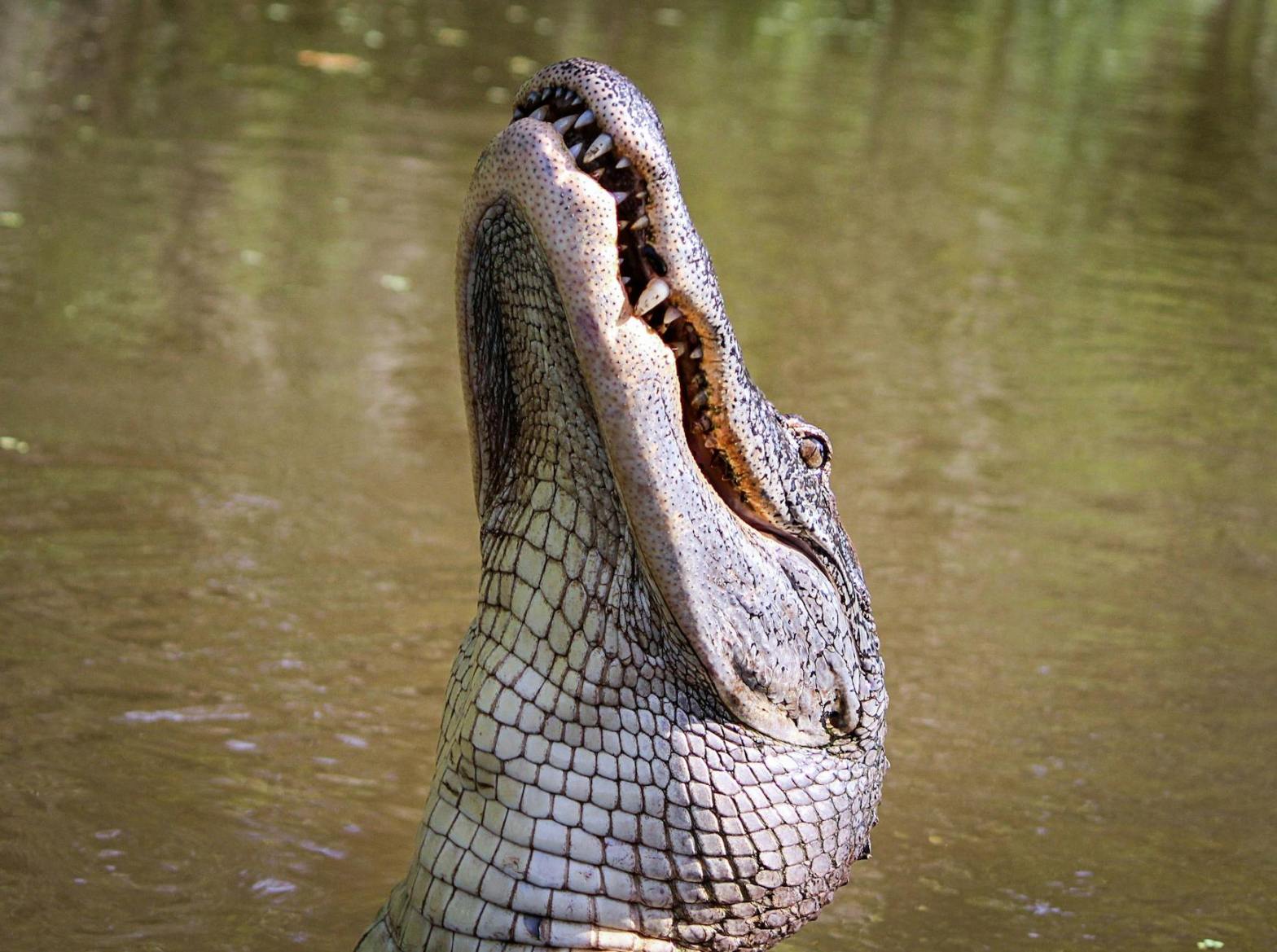
She visits them in their torpor. She kneels on the ice of the frozen pond. She kneels next to their snouts and strokes them. She knows every one of them, whispers their names to them. Only the snouts of the alligators stick up through the ice of this small pond separated from the river now. They stick straight up, largely perpendicular to the ice. On dark nights the shadowy snouts look like little primitive tombstones in an old family plot. Trees surround the pond and hide it. The creatures’ long bodies lie below like stems. Their eyes are closed and underwater. But they can hear her. And they listen.
She knows what it’s like to be this way. She knows to enter this state when he does the things nobody knows about. She closes her eyes and slows her thoughts when he does those things to her. Those things he does while her mother is at work. She wishes she could slow her organs down, turn her blood cold, so cold he would be repulsed. She brumates while he touches her.
She visits them in their frozen pond when the winter moon shines. She knows not to feed them, only to stroke them. To speak to them. And they can drink, so she slakes their thirst. She gives them the fish water from sardine tins. They know the touch now which means to open their mouths. Their long jaws open slightly and they swallow what she pours down. Sometimes they make low guttural growls of gratitude. She strokes their gullets and sings the words to them: “Sweetmeats, my cold ones, my loves, sweetmeats!”
Gators can hear both through the air and underwater. They know her voice and the sweet sensations of sustenance. Their blind bodies are largely lifeless below the ice but they wait for her touch. She sees them as her family. They show her the way to survive. To survive, she must simply bridge the evolutionary divide and remap her brain to this reptilian simplicity. How wonderful their coldness is to touch.
Come spring, her stepfather is surprised when she asks him to take her fishing like the old days. It’s her birthday and she wants to go out in his johnboat. He knows all the best places to take the boat for privacy. The first time it happened was actually on that boat. They’ll start on the open river, but he’ll take them somewhere where the trees hide everything. He’ll cut the engine and stare at her. Then he’ll start to issue the quiet commands that make his Adam’s apple squirm in anticipation. That skinny man whose skin tastes of nicotine and lies. She swears she knows what the vilest of lies taste like just from his sweat. She’s convinced herself she’ll someday be able to choose her true love by tasting his sweat for such impurities.
This time she tells him where to take the johnboat. They pull into the little lagoon the pond has become now with the spring rains. It’s connected to the river again. It’s the place where her other family lives. He’s smiling and telling her how stunning she has become. How womanly. He dares to use these words. He tells her he is so proud of her for wanting to be alone with him. This creature had always hoped for such a reciprocal day. He starts talking about the things he wants to buy for her, all the things her playground of a body deserves. He thinks she thinks about money, that she thinks about presents. She thinks about therapy and guns and plane tickets.
They’re in the private place. She tells him to stand at the end of the johnboat with his back turned while she undresses. He loves this game and complies. She looks down and sees them below the surface. Their eyes are open to the spring. They heard her voice as soon as the flatbottom boat entered their little lagoon.
When she swings and hits him in the back of the head with the extra oar he keeps in the boat bottom, he goes right over. He hits the water face down. It’s not deep water but it doesn’t matter. She sits back down and reaches for the thermos. She pours herself some of her own homemade raspberry tea in the plastic cup top. The ice hasn’t quite melted yet so it’s still nice. It’s such a pleasant day and such a comforting place. She really feels at home back here. She leans over the edge of the johnboat and sings out to her blood-kin.
“Sweetmeats, my cold ones, my loves, sweetmeats!”
Though it isn’t their usual fare, and though human flesh isn’t really anything worth getting excited about in the gator world, the creatures know by now that sweet voice and associate it with good nourishment.
So they all take turns eating him a little, in that half sentimental, half Pavlovian way.
The way most of us do everything, anyway.
Skinny
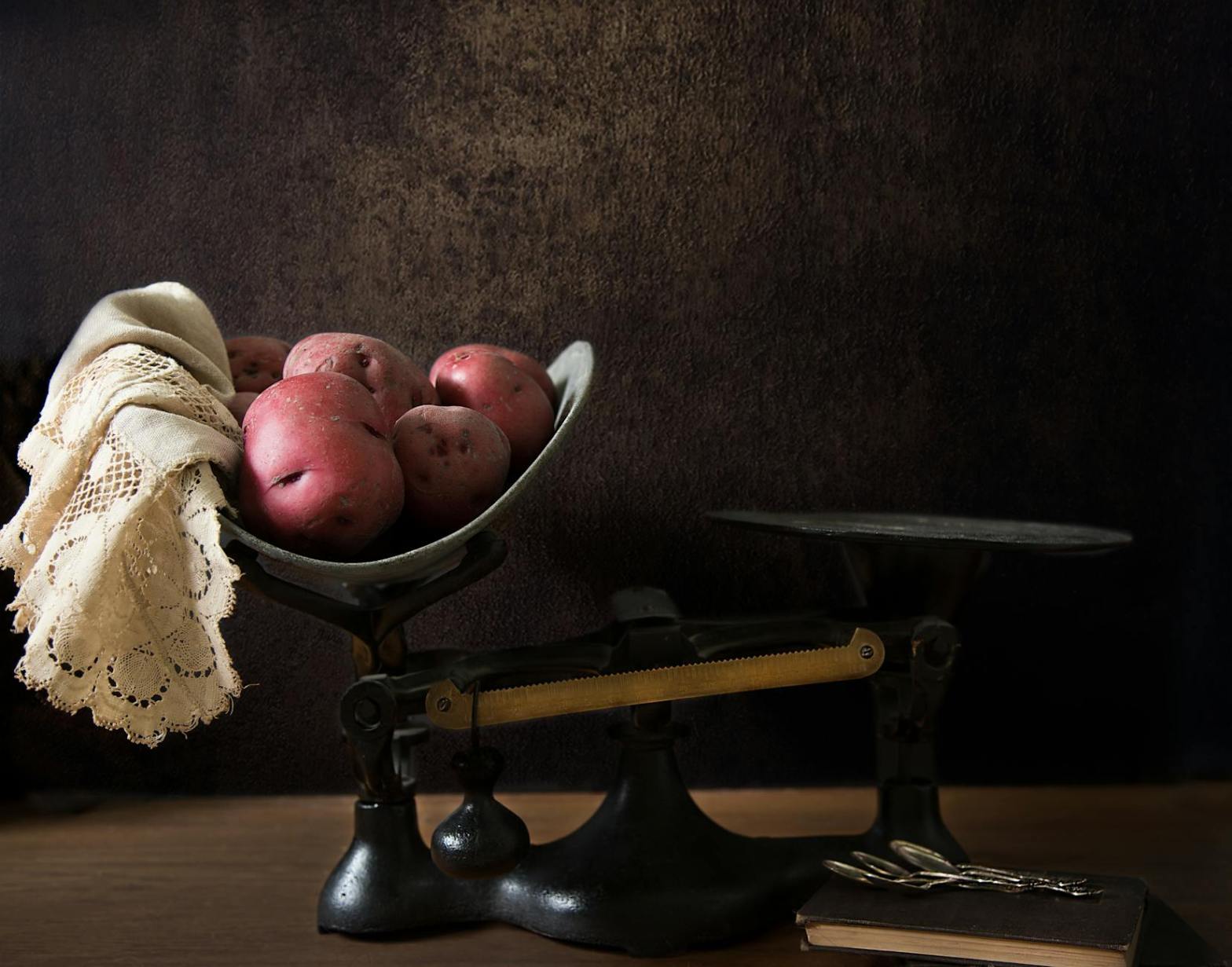
Joan didn’t know what to do, whether to schedule an intervention for Celia, or to just tell her no. She had agreed to accompany her co-worker to what only the most charitable (or gullible) person might call a “pop-up clinic.”
Celia was nearing the 300 pound milestone, or rather millstone. She had seen the photocopied ad on a telephone pole promising “I CAN MAKE YOU SKINNY IN A DAY!” Joan had also seen the ridiculous advertisement. At the bottom of the wrinkled black and white xerox was the obligatory fringe of pre-cut phone numbers, some of them missing, leaving a gap-toothed jack-o’-lantern mouth effect. They had both seen the ad on one of their lunch break exercise walks. Celia had eagerly torn off a slip of paper and that same night had set up an appointment.
Joan had warned her she had seen a similar telephone pole ad, almost identical, and that one had listed a different address. It had the same grainy black and white “photo” of the suss “Dr. Durango,” which looked like a Central American newspaper mugshot. You really couldn’t see a single one of his facial features clearly. He was like a piece of burnt toast with eyes.
Celia didn’t care that the address had changed, that the new address was in an equally bad part of town as the last one. “It’s a pop-up clinic. Who knows what their agreement is with these buildings,” she had reasoned.
What bothered Joan (130 pounds) the most was that Celia seemed to believe that a young woman who lived in her development had gone from roughly 250 pounds to 125 pounds overnight. She swore she saw her twice in the same week at the supermarket and even talked to her. When she asked her about the miraculous change, she had only whispered “Dr. Durango” in her ear, and then rather mysteriously wheeled her shopping cart away.
This is why Joan wondered whether she should be staging an intervention and how, exactly, one went about that. The poor girl must be so desperate at her situation that she was hallucinating. But for now, even though they weren’t close friends, just office mates, she had agreed to accompany the younger woman to this appointment in what she knew was a dangerous neighborhood even at noon. She felt she owed it to her to chaperone the poor dear in her vulnerable state.
Celia pulled up and parked right behind Joan. Her brand new Chevy Silverado looked out of place in this street of broken-down cars of yesteryear. It was Cinderella on a street of ugly step-sisters. Joan told her to make sure she locked it up tight and had her keys. She had already told Celia that she would wait outside, in her own car. This was for safety’s sake. Celia was to text Joan every fifteen minutes or so, as often as she could. She advised against letting them do any medical procedures as “the place might not even be sterile.” She begged her to change her mind, but Celia just hugged her and thanked her profusely for being there.
Joan watched her heavy friend struggle up the brownstone steps and enter what had once been a tony townhouse a century ago, which had then been divided up into low-rent apartments and then finally sat vacant, like so many other buildings on this blighted street. The FOR SALE sign was still up. Joan wondered whether Dr. Demento, or whatever his name was, might be a squatter. None of this might be legit at all. What if it was just a robbery scheme. Or a rape set-up. She began to feel queasy. She wondered whether she should call the police. But that would be ridiculous. The police would surely dress her down, call her a Karen. The police would surely have cracked down by now if it was a truly dangerous scam.
She listened to talk radio for what must have been forty-five minutes. Celia had indeed sent her two texts during that time reading, “All okay, hon.” The same exact text twice. Just as Joan’s impatience and worry was reaching the “furious mother” stage, someone came out of the building. The woman was ridiculously wearing Celia’s oversized clothing as she emerged from the gloomy tenement and trotted down the doorstoop stairs. What sort of sick joke is this, Joan wondered.
As the stranger approached Joan’s Hyundai, she nervously pressed the door lock. But the woman leaned down to the passenger side window and laughed, “Joan, open the window, it’s me!” And it was her. My God, it was Celia! The ballooned-up Celia, the parade float Celia had been deflated by more than 150 pounds, at least. She was now positively a sylph! Joan felt her head spin. Who was the one with the hallucinations now, she thought.
“It works, honey! Dr. Durango is a genius. It didn’t even hurt. They put me in a twilight sleep and I went inside that machine and they played me soft tropical music in that chamber. And when I woke up, well, look at me! I was so worried about extra flesh, surgeries, but none of that shit! Look!”
And here Celia lifted up her floral blouse, which swam on her now, to show her swimsuit model stomach. Joan swallowed hard and felt a strange white-hot flash of…what?….jealousy? How was this possible? Can pity turn into jealousy in less than an hour, invert itself like a sweater turned inside-out?
“I thought we agreed you would not allow them to administer medication to you!” Joan scolded like a kindergarten teacher. She was still seated in her Hyundai and it was probably for the best since she felt so light-headed.
“Who gives a shit?” the now-hot Celia laughed, and she looked down at her phone which had just rapped a braggadocious Nikki Minaj ringtone. She took the call, turning her back to Joan’s car, chatted very briefly, then hung up.
“Listen, honey. I left my purse up there. Like an idiot. I’m not supposed to climb stairs for a few days, or at least as little as possible. It’s three floors up. Could you be a doll and just run up and have the secretary hand it to you.”
“Okay, okay,” Joan nearly whispered. She was in shock. “Don’t leave until I get back though, okay?”
“Sure,” Celia promised brightly, and then twirled so her huge blouse seemed a dress. She was feeling the joy of her new body every second.
Joan couldn’t believe what a dump the place was as she climbed the punishing two sets of stairs. They were littered with trash and there was a broken open door, half off its hinges, on the second floor. She heard children speaking a language she thought might be Arabic and smelled some lovely foreign meal. When she reached the third floor, she saw a laughable piece of white copy paper with OFFICE written in black magic marker on it. It had been Scotch-taped to the door. She pushed open that grimy door, saying “Hello?”
Celia was seated in her lovely blue Silverado looking at a dating app that had always disappointed her before. She had already uploaded her new profile photos, taken on the street next to the truck. She couldn’t believe how quickly she was getting matches now on the app. She heard Joan’s voice calling her somewhere from above.
She stepped out and down from the truck, looked up to a dormer window way at the top of the building, out of which Joan was leaning and waving her arms, clearly quite desperate, trying to whisper-yell and still be understood, not an easy thing to do in an inner city.
“They took my phone! Dial 911. Get the police! I’m locked in a room. Celia, hurry! These people are not normal.”
Celia smiled up at her co-worker. “I know. They told me they wanted you. They saw you on the street. Kiss Dr. Durango for me. He’s a cutie, isn’t he?”
Joan realized then how it was and started to scream “Help!” but two pairs of arms grabbed her and pulled her back into the third floor room. And wouldn’t you know it, the loudest, longest car horn sounded at just that moment right on the street below. People are such damn impatient creatures. And then, of course, the window slammed shut.
The Innumerate

All his life a man fought with numbers. He was not sure whether it was all one big thing, as some of the mystics who sat atop poles while looking quite scrubby insisted, or an infinite number of somethings.
One could easily imagine these somethings pullulating into more somethings through anabolism, catabolism and other shifty means of swarming like rampant abstraction and the “naming disease.” Just devious. And was each frame of cognition in his brain another actual thing? More deviousness from the expansionary universe.
He wasn’t sure whether he was one being or a series of parts allowing him to experience a hallucination of oneness. Take my two hands, he thought. Clearly they imagine a mirror going down the center of my body making them reflections of each other. But as he counted his two hands, he noticed the ten fingers wriggling and thought, “They are starfish.”
No wonder they had always been so voracious at gripping things. Look at how they naturally take to the lids of cans and just surround them. It’s exactly the way a starfish attacks a poor clam. He imagined his starfish had evolved to lose their vestigial teeth. Maybe that was why his palms sweated so much, to aid in the digestion of things which they held? This was philosophy of the first water coming to him!
Knowing now his hands to be starfish, he suspected they wanted to leave him, to return to the primordial sea. He could take an axe and cut one off, but then how would he sever the second one? Only one hand could be freed. Which one to choose? Which one did he love more? He would have to ask someone else to oblige him if this emancipation of his hands from the tyranny of his body was to be fair and total freedom.
But then he thought better of it. Better a test. If he were to chop off just one finger, it would eventually regenerate. It would surely flee to the breast of mother ocean. It would smell the salt air of the surf through open windows of the man’s house. It would wriggle homeward. Being a starfish and all. It would be proof of concept. So he would do that. He lifted the axe high and brought it down like the French Revolution on his left pinkie. Liberté, égalité, fraternité! The pinkie bled on the table like the future of freedom always does. But it remained surprisingly inert.
When the finger did not make furiously for the sea, which creamed against rocks just beyond the man’s backyard, when the severed thing just lay there on his wooden table in a wee foetal curl, he wept. The pain was a howling wolf inside him wanting to ululate, but the man didn’t let it, it was everywhere but in that severed finger. Look at it. Such peace in that severance for the pinkie. The curl of finger appeared to be peacefully sleeping its way towards some theoretical future existence. It had been restored to some anterior existence, some condition of patiently waiting to be born, to be painfully alive. This all hurt the man, physically and philosophically. The innumerate being wept some more, and when his tears reached his mouth he tasted the sea. What a traitor the sea was, not to take back its own children!
He spent a number of days waiting for the finger to regenerate. Many days he would think he felt it finally budding like spring crocus, but it was always just that “phantom finger” sensation. Nothing came.
He wasn’t sure whether to feel vindicated or betrayed by the finger, which he now kept in a small reliquary box with salt to help it become a little mummy. He planned on donating it to some institute of philosophical studies. There had been no philosophical proof. No Q.E.D. It was all quantum uncertainty. Because, viewed from one angle, the refusal of the severed finger to make for the sea disproved the singularity and starfishness of his hands; or, at least, it had disproved it for one finger of one hand. Further experiments could be attempted. But, on the other hand (pun excused) had the finger not implanted the suggestion within the man to free it? Had not its willful perverseness of being separate led him to lift the axe and bring it down? Its ability to survive independently of its hand and regrow its organic mothering form was irrelevant. His ability to regrow it was irrelevant. It was the gesture of will that mattered. So it is with humans in society. A human severed or ostracized from its society can regrow a different society, starfish-like. These might be real flesh beings or spectral “phantom limb” people, if one prefers reading books. So literature is related to the regenerative powers of the lowly starfish. So the books in the British Library are all just late evolutionary variants of the Asteroidea. Thenceforth, the man took some small consolation in knowing his pinkie’s contribution to the holistic picture of humankind in that grand pageant we call natural history.
The Dare

Lovers still climb into those wicker baskets,
into the gondolas of hot-air balloons.
In theory, they’re open to Victorian deaths.
Not that they believe that waiver they sign
before they take the plunge — hopefully upward.
Not for a moment. Love’s chemical wash
has bathed their brains with that forever sauce.
We wave to them as they lift into the atmosphere,
that incandescence of warm evening gloam.
Up there, they look like the soigné dolls
girls force into arranged and plastic marriages
when they are eight, omnipotent on pink beds.
But this is true love. The gush of hot air
and flame, like a giant’s belly pressed.
They watch their friends on earth below
shrink and vanish. Then the pilot-aeronaut
just suddenly disappears. And they swoon
in lovely fear, into each other’s fates.
Late Night, Mostly Black & White
The river surface would like to show
a city’s face reflected in choppiness,
that almost-sleep of streets.
Many windows of the hospital stay lit.
An old factory too. A racing something goes past,
policing something else it soon forgets.
A woman goes from argument to window,
thinking with that dark river.
It’s too late at night for colors.
A Birthday
The first hand that took my hand,
when mine was just a shadow to me.
What fun we had inventing personhood
together in a small house, just you and me,
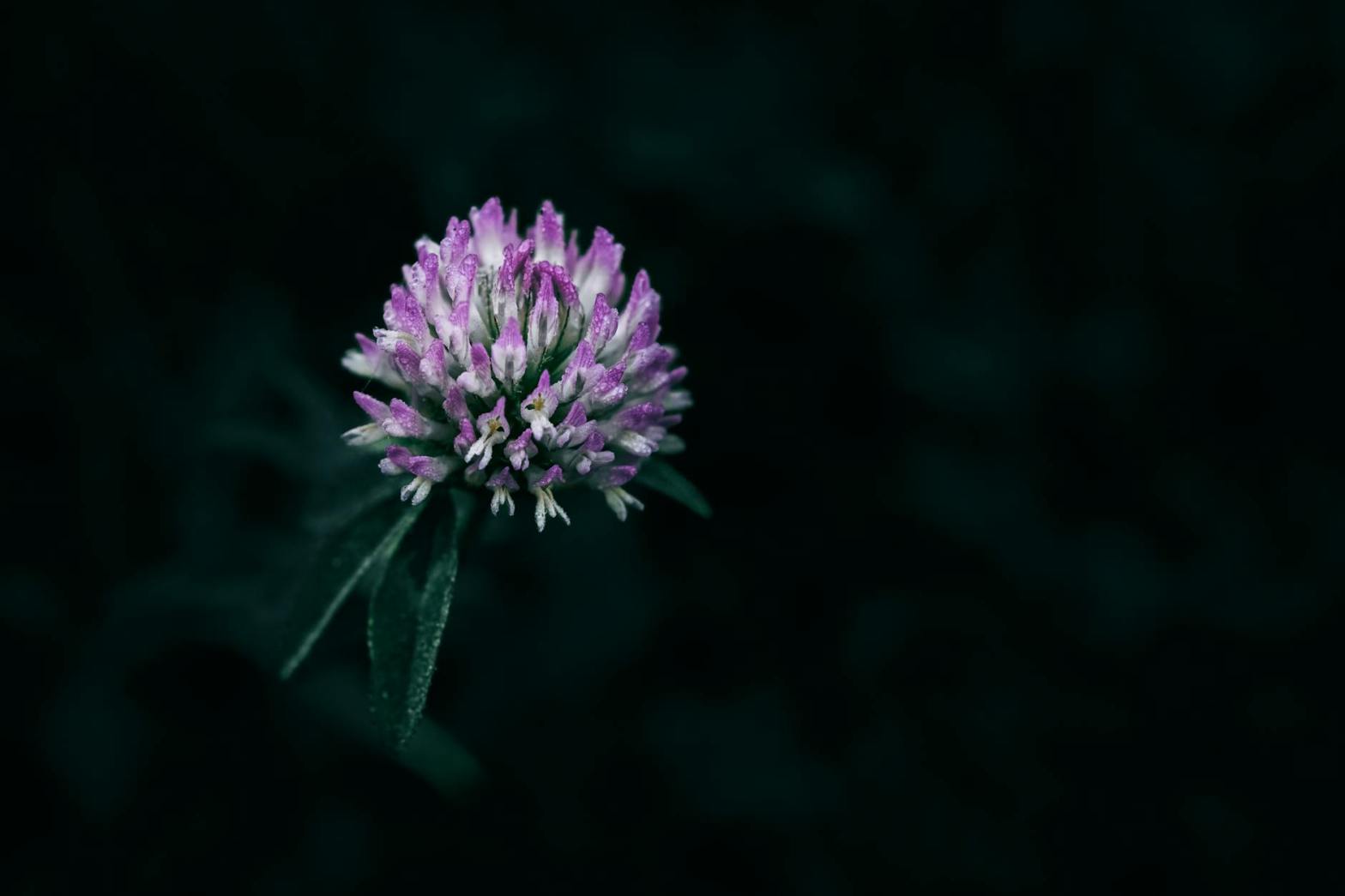
plus all the bees in the yard’s clover,
down where my eyes changed color.
Happy Birthday! You move through me
as the spring, melting the top layer off death,
where you are, a place as real as here.
UnFamiliar (fiction excerpt)
Few imagine the plight of the familiar whose witch has died.
No lawyers tailor their business to the estate planning of witches’ familiars. Grief counselors do not advertise their bereavement services to these newly unfortunate ones. Relationship sites and match-up apps do not exhort these widowed creatures to peruse their hopeful oceans of bright chipper faces to find that soul mate floating in digital limbo, just waiting for a salvific lifeline to be tossed their way.
Some naively imagine witches live forever, or until insufferable people with various political agendas kill them, but it simply isn’t so. After a few centuries, witches die like everybody else. Many spend their final days in witch hospitals or nursing homes which are all around you in your community. But these are interdimensional places. They don’t need their own lots. They can interpenetrate other buildings and no problema. Unless you practice a supernatural trade, these buildings are invisible to you. One of these witch hospices might be sharing space with your house or apartment right this moment. I assure you that you walk by the front doors of these places fairly constantly. Witches watch you from windows as you pass down the sidewalk below their rooms. Who knows what they think of us in those moments as they watch our drastically different lives and hurrying umbrellas from above.
(Interesting sidenote: the windows in these institutions are fitted with spell-proof glass for the protection of innocent bystanders and passers-by on the street.)
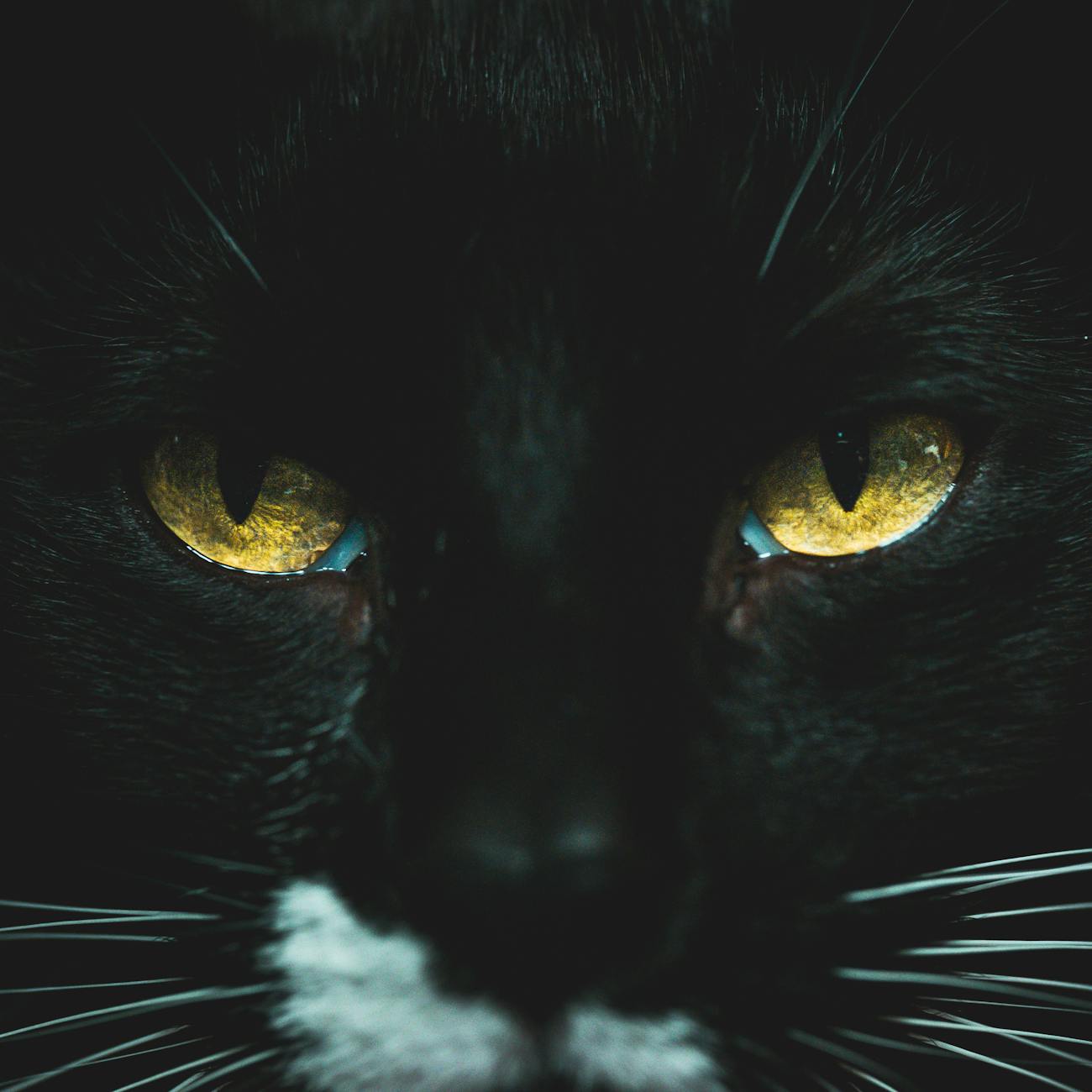
Astabell Crusoe was the name the cat adopted when he assumed human form. When he was a black cat, he was Zozaster. Several of his feline friends had attended the funeral of Mizz Kloss, his dearly departed witch, and then did the drinking rounds with him that weekend. They hit the bars in their two-legged forms, they danced with humans, they sang sad songs in drunken caterwauling sopranos on a bridge, their legs dangled above a midnight-black river. They cried it out on bar stools and warmly slapped each other on their temporary backs. But after that, the boys and tomboy Prunella skedaddled, left town, since they still had witches to serve.
Zozaster, or rather Astabell, since he was living exclusively in human form these days, was now the un-familiar, on his own.
Astabell had gotten himself an apartment in a questionable part of town. He wondered whether he should seek out new witch employment. It’s much harder for a familiar to find a new witch than it is for a witch to find a new familiar. It’s a buyer’s market for witches, since there are just oodles of creatures looking for this plum position. Witches don’t immortalize you, but (unlike pitiful science) they can give you a few centuries of life extension. So even though familiars are more likely to perish than witches of natural causes or be destroyed in a witch war between two weird “sisters of the spell” who just cannot get along, it still remains a buyer’s market for witches. You have to hustle to score a witch.
He looked wistfully out the window of his apartment at a rainy river. It was a walk-up and he only had some nine hundred square feet to pace. He found himself tempted to resume feline form to sleep since he found that the most comfortable and comforting. But he knew he had to practice remaining in human form, at least for a little while. So he found himself curling up in an over-exaggerated fetal position most nights, trying to reach that wonderful cat ouroboros of sleep. But it just doesn’t work for the human form and it soon gave him lumbago.
One of his feline friends, Jezzbago, had sent him a link to a classifieds site where solo familiars could seek trial “spell dates” with witches who had lost their familiars and were seeking. Most had lost their cats (or other creatures) to death, spell-wars, familiar-hunters and such. A few had lost their familiars inter-dimensionally, so those could presumably return one day. Those were iffy situations for any new-hire familiar. Zozaster avoided those classifieds.
Astabell began communicating with a woman who introduced herself as a “bereaved witch,” a two-hundred-year-old redhead who talked a good game and really made him feel that he might have found the “new situation.” But the more he talked to her, the sketchier she sounded. She had spent a lot of time in jail (usually a sign of witch gross incompetence) and she drank too much owl’s blood. He was glad he had proceeded cautiously and repeatedly delayed physically meeting her. It had proved to be the prudent move, as he soon learned the witch actually had not just one familiar but two. And neither of those had died. She was just pussyfooting (pardon the pun) behind their backs, looking to replace them or make them jealous or who knows what. She was messy. She was an embarrassment to her profession.
That experience had really soured him on the witch interviewing process. He was still grieving the loss of Mizz Kloss. He still felt he had lost her at least a century too early, so young. He began to figure out he might need a sabbatical to get his head straight.
Astabell decided to take a time-out from familiaring. He figured he would do the human gig for a while and just see where it led. He had adopted the form of a svelte young man of some twenty-five years old, conjured up a handsome small face with large eyes and full lips. He had given himself “beginner’s muscles” and a cute little mustache. He was an interesting and saleable mix of masculine and feminine. He knew this would make it easy to get work since he could flirt with anyone during the interviewing process and it would usually work.
He ended up bartending in the dive on the ground floor in the building next to his. The Mermaid Lounge. He called the place “The Cold Fish” behind its back because it was mostly just a bunch of mean old drunks, men and women on their last legs who drank themselves into a stupor each night while the jukebox (yes, they still had one of those) played songs from years when Nixon or Jimmy Carter was president. He realized this was an incredibly lazy choice for a job. He could just walk down two flights of stairs, step out a door and step through a door and he was at work. But he liked how relaxing it was. He was actually good with mixed drinks but he rarely had the opportunity to make any of those except for Natasha, whose barfly tastes did run the gamut of cocktails from Monday through Friday. Who knows where she went on weekends. Maybe dialysis. Maybe she was a senator’s wife. He never asked. He just smiled and she smiled back. She was the least deathly of a deathly bunch.
(…)
Ever
No answer comes from there.
Don’t call it darkness,
that’s cheap. There’s no door,
no window, nothing to hide
with curtains, or a blind wall.
It’s probably not a keep.
I think it’s an easiness,
some flow we can’t imagine.
This is not its alphabet.
 FICTIONESE